Collaboration Is Contribution
Collaboration should leave people better able to do the work together.
A meeting can resolve a disagreement that has stopped a team for weeks. A careful review can catch a mistake before it reaches a customer. A conversation can give someone enough understanding and confidence to take responsibility. These are contributions, even when they produce no new document or line of code.
The question is what the interaction makes possible. Did it clarify a decision, improve the result, reveal a risk, or help someone do something they could not do before?
Attendance and activity are easy to observe. The benefit sometimes takes longer to see. We should examine that benefit without assuming that everything useful will look like an artifact.
Participation needs a purpose
“Involve everyone” leaves a great deal unresolved. Someone may need to contribute specialist knowledge, agree a tradeoff, learn the system, or accept responsibility for its use. Those are different jobs, with different demands on people’s time.
When the purpose stays vague, the person moving the work can inherit all of them. They must identify the stakeholders, arrange the conversations, interpret the concerns, and explain why progress is slow. Other people remain free to ask for more involvement without saying what they will bring or when they can bring it.
A useful invitation makes the contribution specific enough to accept. Review this example with us. Help decide which failure matters most. Try the handoff and show us where it breaks. Spend an hour making the next change together.
If participation requires time the team does not have, that is a priority decision. It needs someone with the authority to choose what waits.
Making contribution possible is part of the work
An open repository is a useful beginning. It does not establish that somebody can find the relevant material, understand the choices, or make a change with confidence.
A person joining the work may need a plain-language explanation, access to the right system, a real example to work through, or someone beside them for the first attempt. Providing those things is a contribution. The time it takes belongs in the plan.
This applies equally to people who prefer to build quickly. A result that only its creator can understand leaves others dependent on that creator. Helping somebody change and maintain it may matter more than adding the next feature.
The person joining also has a responsibility: to engage with the available material, try something, and make the point of difficulty specific enough for someone to help. Both sides should leave the encounter with more to work with.
Useful contributions take different forms
A contribution might be:
- A real example that changes our understanding of the problem.
- A correction to a rule, an assumption, or a piece of software.
- A decision about scope, risk, or competing priorities.
- An explanation that lets somebody participate without an interpreter.
- A review or working session that helps someone take responsibility.
- An obstacle removed, including missing access, authority, or time.
The standard also applies to leadership. Naming an owner helps when that person has the authority and capacity to act. Asking for an update helps when the answer informs a decision. Neither should be judged solely by whether the request was made.
AI makes the distinction more consequential
AI can help someone turn an example into a test, prepare a comparison, explain unfamiliar code, or examine the history behind a decision. These uses can make participation easier and less dependent on a few people who hold all the context.
It can also produce more material for everyone else to interpret. A long summary may transfer the burden of finding the point to its reader. A new dashboard may preserve a routine that nobody has examined. A plausible draft may hide the question that needed a human answer.
The work needs a recipient and a purpose. We should be able to follow a contribution into use, notice what it costs other people, and change it when it fails to help.
That is the standard we want for Goose Group: leave the work easier to understand and continue, and leave the people around it better able to act.
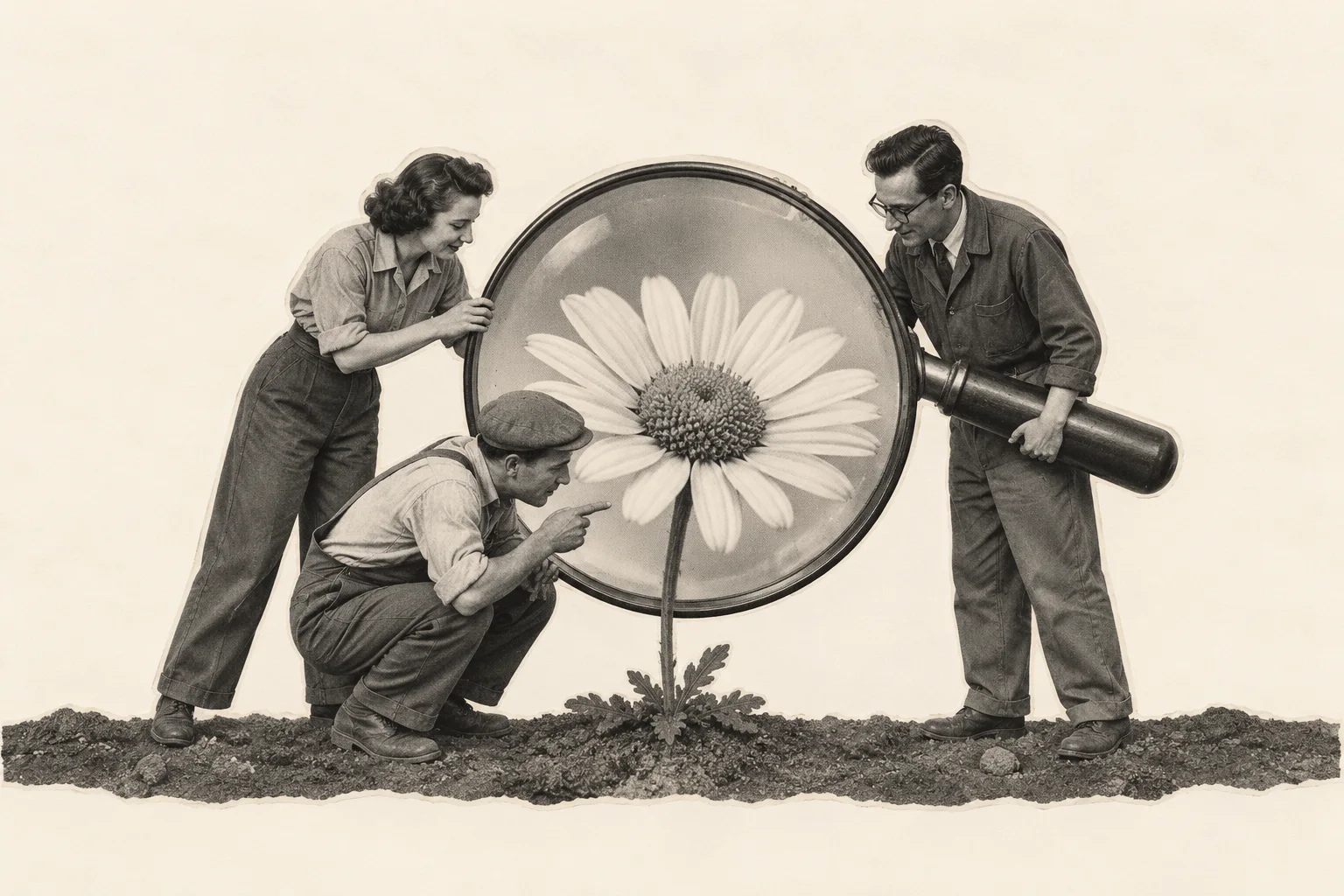
Original illustration generated with AI for this belief.