The Ability to Keep Going
A useful piece of work can leave more behind than its immediate result. People understand their problem better. They have examples they can return to, a method they can repeat, or a tool they can change themselves.
That is what we want from the idea of building a factory: the ability to keep making useful things. The metaphor becomes a problem when it persuades us to build machinery before anyone needs what comes out of it.
Let the work earn the machinery
We start with something worth doing. When the same difficulty keeps appearing, a shared tool or method may deserve investment. When a task is unlikely to recur, doing it once can be the sensible answer.
The machinery also needs care. Someone has to understand it, repair it, decide whether it still fits, and eventually retire it. A collection of clever tools that only its creator can operate has not made the organization more capable.
Sometimes the lasting investment is less technical. A team may need time together to compare examples, permission to improve its own work, or a leader who can make a decision that keeps being passed around. Those are part of the ability to keep going too.
Judge what people can do next
We should be able to see the benefit in the next piece of work: a clearer starting point, less repeated explanation, a correction someone can make without us. There is no prize for the size of the apparatus.
Keep What the Work Teaches describes how learning carries forward. Tools We Can Hand Over describes the responsibility that comes with making machinery for somebody else.
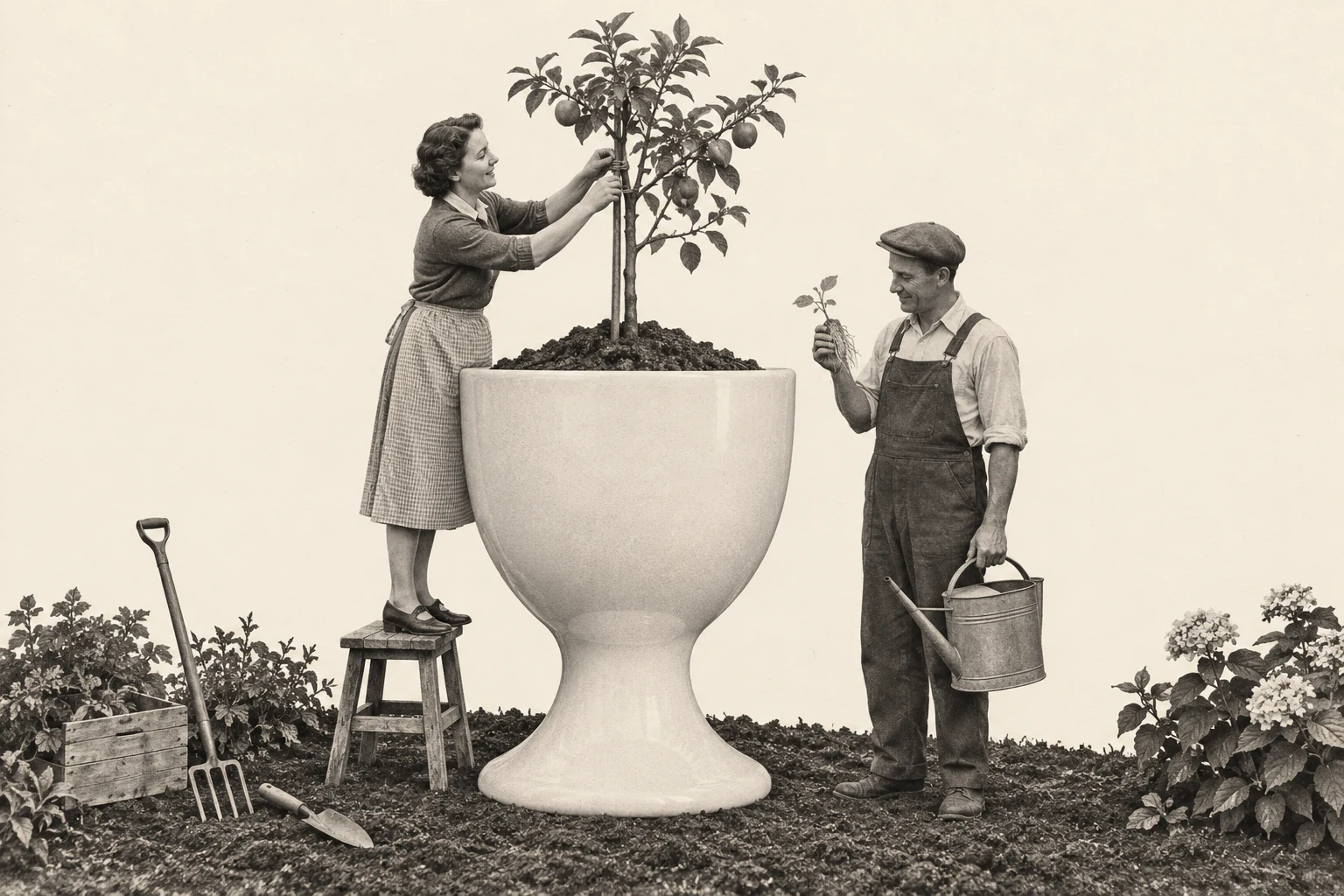
Original illustration generated with AI for this belief.